

How Molecular Hydrogen Targets Oxidative Stress
Here’s the short answer: molecular hydrogen (H<sub>2</sub>) is a very small gas that can move into the bloodstream after you drink hydrogen-rich water, enter cells, and react with the most harmful oxidants linked to oxidative stress. The main idea is simple: it may help lower cell stress without shutting down the reactive molecules your body still uses for normal signaling.
If I strip the article down to its core, it says 4 things:
- Oxidative stress can affect movement and recovery. Too much ROS may add to muscle soreness, joint stiffness, and fatigue.
- Hydrogen-rich water is one delivery method. A tablet dissolves in water, releases H<sub>2</sub>, and the drink should be used within about 30 minutes.
- H<sub>2</sub> appears selective. It mainly reacts with the most damaging radicals, such as hydroxyl radicals and peroxynitrite, while mostly leaving signaling molecules alone.
- The goal is support, not treatment. The article frames molecular hydrogen as a daily wellness tool for mobility and recovery, not as a cure or drug.
One detail that stands out: some tablets are described as reaching up to 12 PPM of dissolved hydrogen in water, and the article says H<sub>2</sub> can enter circulation fast because it is small and non-polar.
So if you want the plain-English version, it’s this: molecular hydrogen is presented as a way to help manage oxidative stress at the cell level, which may matter for energy, soreness, and joint comfort as you age. The rest of the article explains how it gets into the body, what it may do inside cells, and why daily use is emphasized.
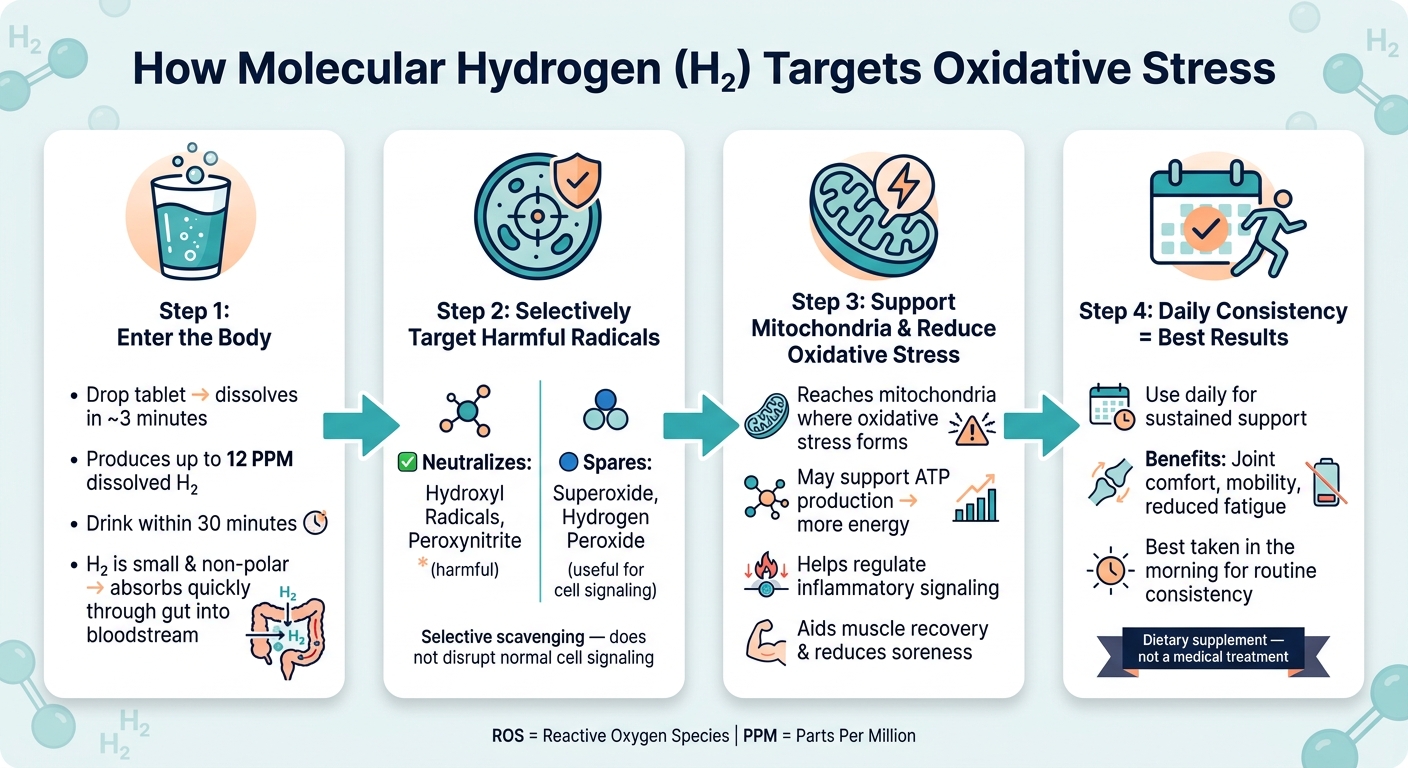
How Molecular Hydrogen Works in Your Body: A 4-Step Visual Guide
Molecular Hydrogen Benefits, Oxidative Stress and Autophagy - Tyler LeBaron
sbb-itb-6860cc4
Step 1: How molecular hydrogen from water enters the body
Molecular hydrogen gets into the body with little friction. H2 is extremely small and non-polar, so it moves from water into the body with ease. That tiny size also helps it enter circulation fast.
From dissolved tablet to hydrogen-rich water
Drop a tablet into water and let it dissolve for about 3 minutes. Skip hot water, because heat can make the gas leave the water faster. As the tablet reacts, it releases molecular hydrogen into the water and turns it into hydrogen-rich water. Some effervescent tablets can produce up to 12 PPM in a glass of water [3].
Edenvia Molecular Hydrogen tablets use a magnesium-based effervescent formula to make hydrogen-rich water [5][6].
Absorption, circulation, and exhalation
After you drink it, H2 is absorbed through the gut and enters the bloodstream fast. Its small, non-polar structure helps it pass through cell membranes. From there, it can travel to tissues, including mitochondria, where oxidative stress forms [4][5]. Once it is in circulation, it can reach the cells where oxidative stress occurs.
Its small size also helps it move through the body fast and reach cells that larger antioxidants may not [5].
Because dissolved hydrogen leaves the water quickly, drink it soon after you make it, ideally within 30 minutes [5].
Next, we’ll look at how it interacts with harmful radicals without disrupting normal cell signaling.
Step 2: How molecular hydrogen selectively targets oxidative stress
Your cells use certain reactive oxygen species, or ROS, for normal day-to-day jobs. They help with cell signaling, adaptation, and defense. Molecular hydrogen stands out because it goes after the most damaging oxidants first. H2 preferentially reacts with the most harmful oxidants while largely leaving the milder, useful ones alone [1]. That selectivity helps explain why it works the way it does.
Harmful radicals versus useful signaling molecules
Not all reactive species are bad. Some, such as superoxide and hydrogen peroxide, help your cells send signals and respond to stress. Others, like hydroxyl radicals and peroxynitrite, are much more reactive and can damage tissue and add to inflammation. H2 neutralizes the latter while largely sparing the former [1].
That balance matters. It means H2 can lower oxidative stress without getting in the way of normal cell signaling.
Direct scavenging and indirect cell defense pathways
H2 appears to work in two main ways. First, it directly neutralizes hydroxyl radicals and peroxynitrite [1]. Second, it may support mitochondrial energy production while helping regulate inflammatory signaling [3].
That cell-level balance sets up the next step for energy, recovery, and mobility.
Step 3: What this means for cells, mobility, and recovery
Because H₂ goes after the oxidants that tend to do the most harm, its effects matter most in mitochondria, recovery, and inflammation.
Mitochondria, inflammation, and muscle recovery
H₂ may help cells maintain ATP more efficiently. In plain English, that can support energy, recovery, and less fatigue. When oxidative burden is kept in check, molecular hydrogen may also help the body recover after activity and ease soreness-linked inflammation [1][2].
How this may relate to joint comfort and daily mobility
Joints - and the muscles around them - can also be affected by oxidative stress. When inflammation builds in those tissues, it may lead to stiffness and a lower range of motion. That may support joint comfort, stiffness, and day-to-day mobility [1][6].
That’s why preparation and steady use matter.
Step 4: How to use hydrogen-rich water in a daily routine
Preparation, timing, and consistency
Once you know how molecular hydrogen works, the next step is simple: use it the same way each day. The biggest factor here is consistency. If you only use it once in a while, that stop-and-start pattern can get in the way.
Prepare the tablet as directed in water, then drink it soon after. Dissolved hydrogen doesn’t stick around for long, so timing matters more than storage. Aim to drink it within 30 minutes to limit hydrogen loss.
A lot of people add it to their morning routine because that makes it easier to stay on track. The main point is pretty straightforward: daily use matters more than occasional use.
What to know about Edenvia Molecular Hydrogen
Edenvia Molecular Hydrogen tablets dissolve in water to create hydrogen-rich water.
Conclusion: Key takeaways on molecular hydrogen and oxidative stress
Oxidative stress can put pressure on the tissues involved in movement and recovery. The main issue is finding support that helps with that stress without interfering with normal cell signaling.
Molecular hydrogen is a small, non-polar gas that moves fast through the body and into cells, including mitochondria. What sets it apart is its selectivity: it targets the most harmful free radicals, such as hydroxyl radicals and peroxynitrite, while leaving in place the beneficial reactive oxygen species your body needs for normal cellular signaling. [1][3] That movement matters because it helps hydrogen get to the cells where oxidative stress is most active.
That selectivity helps explain why hydrogen-rich water may interest people focused on mobility and recovery. Still, it’s best viewed as a support tool, not a medical treatment.
Molecular hydrogen supports cellular balance, but it is not a treatment for medical conditions. Hydrogen tablets are sold as dietary supplements, and statements about their effects have not been evaluated by the FDA. [3][6]
FAQs
How fast does hydrogen-rich water work in the body?
Molecular hydrogen is the smallest molecule. That matters because it can move through the body fast and reach cells that larger antioxidants may have a harder time getting to. After you consume it, it crosses cell membranes fast and starts supporting the body’s own defense against oxidative stress.
It also tends to act soon after ingestion. That said, many users say they notice shifts in energy, brain fog, and cholesterol levels within 7 to 10 days when they use it daily and stay consistent.
Can molecular hydrogen reach the mitochondria?
Yes. Molecular hydrogen is one of the smallest molecules, so it can pass through cell membranes and reach the mitochondria.
Once there, it may help support mitochondrial function and assist cells in producing ATP more efficiently.
Why should hydrogen-rich water be consumed within 30 minutes?
Hydrogen-rich water is best consumed within 30 minutes of preparation. Why? Because molecular hydrogen is a gas, and over time it slowly escapes from the water. As that happens, the hydrogen concentration drops.
For that reason, it makes sense to drink it while the reaction is still active. That gives you the highest hydrogen concentration, which may help support your body’s defense against oxidative stress at the cellular level.
Related Blog Posts
Disclaimer: These statements have not been evaluated by the Food and Drug Administration. This product is not intended to diagnose, treat, cure, or prevent any disease. This article is for general informational purposes only and is not medical advice. Consult a qualified healthcare provider before starting any supplement, especially if you are pregnant or nursing, have a medical condition, or take prescription medication.