

Hydrogen Water and Everyday Joint Stiffness: How It Works
My takeaway: hydrogen water has not been shown to reliably ease everyday joint stiffness. I’d keep regular movement, sleep, and hydration first - not replace them with hydrogen water.
For adults ages 45–65, here’s what I’d keep in mind:
- What it is: Water with added dissolved hydrogen gas, or H₂.
- What researchers study: Changes in oxidative stress and inflammatory markers. Those changes don’t prove better joint comfort.
- What human studies show: Exercise and fatigue research doesn’t establish relief during daily activities.
- How I’d approach Edenvia: Follow the current label, avoid hot water, and check any batch test records. The article advises drinking it within 30 minutes of preparation.
- When I’d seek advice: If discomfort persists or feels unusual, or if I take medications, I’d talk with a qualified health professional.
<u>I’d treat it as an optional add-on - not a proven fix.</u>
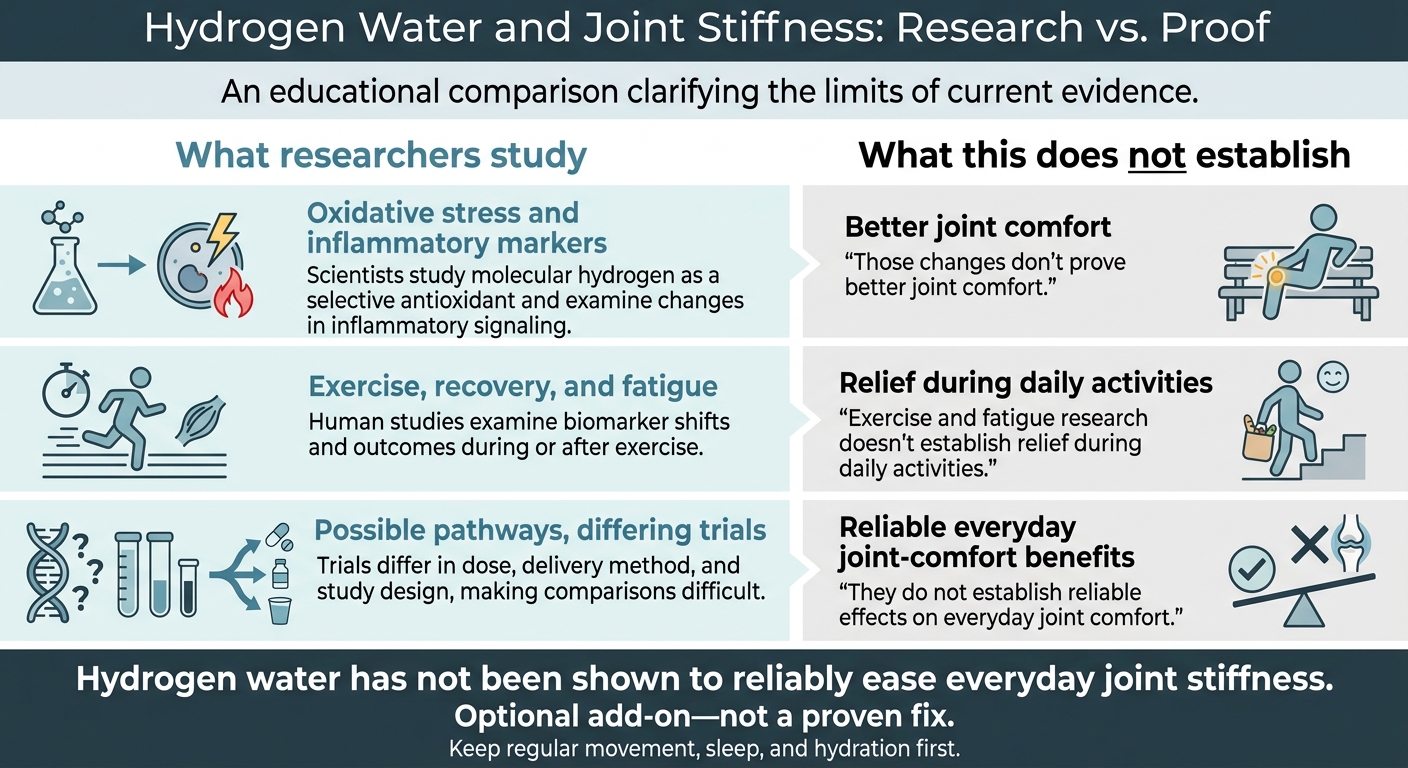
Hydrogen Water and Joint Stiffness: Research vs. Proof
References
- Ohsawa I, et al. Nature Medicine. 2007;13(6):688–694. https://doi.org/10.1038/nm1577
- Aoki K, et al. Medical Gas Research. 2012;2:12. https://doi.org/10.1186/2045-9912-2-12
sbb-itb-6860cc4
Oxidative Stress and Inflammatory Signals
Antioxidant Defenses and Lab Measurements
Oxidative stress occurs when reactive oxygen species (ROS) build up faster than the body’s antioxidant defenses can handle them. In hydrogen-water research, scientists study molecular hydrogen as a selective antioxidant - one that targets hydroxyl radicals and peroxynitrite while leaving helpful ROS intact.[1] Researchers examine these pathways as part of their work on everyday joint comfort.
Cell Signaling and Inflammatory Markers
Researchers measure changes in inflammatory markers to study whether molecular hydrogen may help cells maintain normal inflammatory signaling.[2] Lab findings don’t establish effects on daily movement comfort. The next step is to test whether these marker changes also appear in human studies that assess movement comfort.
References
- Ohsawa I, et al. Nature Medicine. 2007;13:688–694. https://doi.org/10.1038/nm1577
- Sim M, et al. Scientific Reports. 2020;10:12130. https://doi.org/10.1038/s41598-020-68930-2
Human Studies: Findings and Limits
Studies in Healthy Adults and During Exercise
Human trials examine whether biomarker shifts relate to comfort during everyday movement. The results help researchers study how these changes work, but they do not show day-to-day joint comfort.[2]
Exercise studies have also looked at recovery and fatigue after short bouts of exertion. Those findings may help guide recovery research, but they do not support joint comfort claims.[3]
What the Evidence Can Show
Trials differ in dose, delivery method, and study design, making comparisons difficult. Together, they suggest possible pathways, but they do not establish reliable effects on everyday joint comfort.[2][3]
References
- Sim M, et al. Scientific Reports. 2020;10:12130. https://doi.org/10.1038/s41598-020-68930-2
- Aoki K, et al. Pilot study: Effects of drinking hydrogen-rich water on muscle fatigue caused by acute exercise in elite athletes. Medical Gas Research. 2012;2:12. https://doi.org/10.1186/2045-9912-2-12
Using Edenvia Alongside Daily Movement Habits
Human studies haven’t shown clear benefits for everyday joint comfort. Treat hydrogen water as a small add-on, not a replacement for regular movement, hydration, sleep, and gradual increases in activity.
Preparation, Storage, and Product Testing
Follow the current package directions. Drop one tablet into room-temperature or chilled water and let it dissolve for about 3 minutes. Do not use hot water. Check the package for water volume and tablet storage instructions, and drink within 30 minutes of preparation because dissolved hydrogen concentration changes over time[3][4].
Visit Edenvia Molecular Hydrogen for current instructions and batch information. If lab documentation is available, check the test date, what was tested, and the batch number.
Movement Habits and Use Notes
Keep moving with comfortable walks, gentle mobility exercises, and breaks from long periods of sitting. Increase activity gradually rather than pushing through discomfort. Track how walking, climbing stairs, and standing feel during your usual activities.
Review the ingredients and serving instructions with a qualified health professional, especially if you take medications or have unusual or persistent discomfort.
Conclusion: Key Takeaways
Molecular hydrogen may support antioxidant defenses and normal cell signaling. But current human studies don’t show reliable day-to-day joint-comfort benefits.[1][2] Research also can’t predict whether - or when - you might notice changes in daily comfort.
Use Edenvia Molecular Hydrogen as a small add-on to your routine. Before adding it, check the label and documented product information.
References
- Sim M, et al. “Hydrogen-rich water consumption positively affects muscle performance, lactate response, and markers of inflammation and oxidative stress in resistance-trained athletes.” Scientific Reports. 2020;10:12130. PubMed
- Aoki K, et al. “Pilot study: Effects of drinking hydrogen-rich water on muscle fatigue caused by acute exercise in elite athletes.” Medical Gas Research. 2012;2:12. DOI
FAQs
Do athlete studies apply to my joint comfort at age 45–65?
Yes. Some molecular hydrogen studies focus on athletes, but the proposed mechanism - supporting the body’s natural defenses against oxidative stress - may also help with everyday joint comfort and mobility in adults ages 45–65 [1][2]. Supporting cellular balance may also help with physical recovery across activity levels [3][1].
With consistent daily use, you can track how your joints feel over four to six weeks [1].
How can I track changes in my everyday mobility?
Over four to six weeks of consistent use, track how your joints feel, how long recovery takes, and muscle soreness after exercise [1]. Keep your daily routine steady so you can better assess your body’s response over time [1][2].
For a more detailed assessment, clinical markers such as C-reactive protein (CRP) and erythrocyte sedimentation rate (ESR) can help you track changes in inflammation [1].
What should I look for in hydrogen-water batch tests?
Look for reports that use gas chromatography, the only method that measures molecular hydrogen directly. Avoid products that rely on indirect tools, such as ORP meters.
Make sure an authorized third-party lab issued the certificate and that it matches your product and batch number. Check that the test date is current and that the report confirms compliance with minimum hydrogen concentration thresholds and safety standards, including contaminant screening and pH limits.
Related Blog Posts
Disclaimer: These statements have not been evaluated by the Food and Drug Administration. This product is not intended to diagnose, treat, cure, or prevent any disease. This article is for general informational purposes only and is not medical advice. Consult a qualified healthcare provider before starting any supplement, especially if you are pregnant or nursing, have a medical condition, or take prescription medication.