

7-Day Hydrogen-Rich Water Training Plan
I’d use these 7 days to track recovery - not to prove hydrogen-rich water improves performance. Follow the molecular hydrogen product label, keep plain water as your main workout drink, and rate energy, soreness, and joint comfort from 0–10 each day. Exercise research is mixed, so a change in your scores does not show that HRW caused it.
Here’s how I’d structure the week:
- Days 1–3: Record a baseline and stick with familiar walking, moderate cardio, and strength workouts.
- Days 4–6: Take an easy recovery day, do intervals only if they’re already part of your routine, and keep any longer session within your usual limits.
- Day 7: Compare your notes, including sleep, food, fluids, and training load, before deciding whether to repeat the routine.
My rule: don’t increase training or supplement intake to chase results. <u>Stop supplementation if unusual symptoms occur</u>, and get urgent medical help for chest pain, fainting, confusion, or severe shortness of breath.
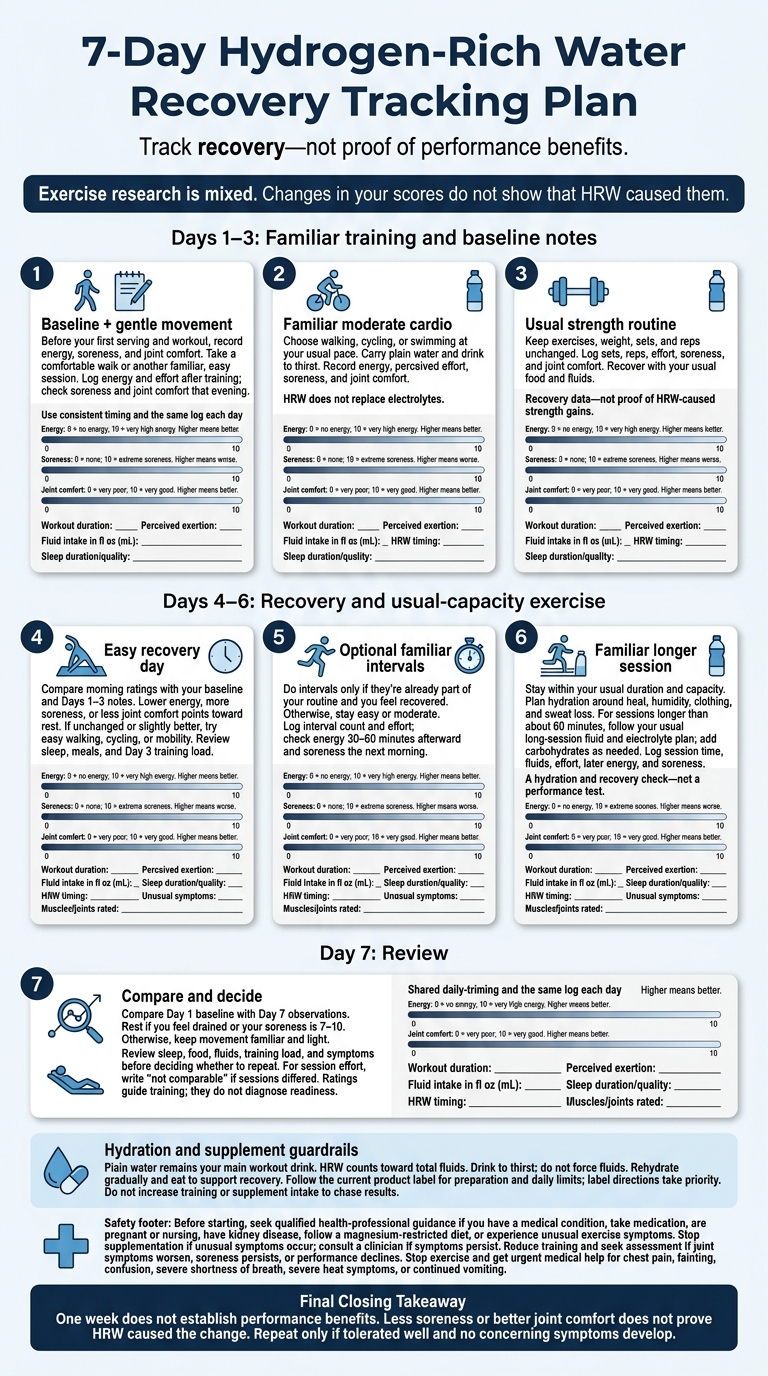
7-Day Hydrogen-Rich Water Recovery Tracking Plan
Hydrogen Water for Bodybuilders: Benefits & Science Explained
sbb-itb-6860cc4
References
[1] Aoki et al. Pilot study: Effects of drinking hydrogen-rich water on muscle fatigue caused by acute exercise in elite athletes.
[2] Ostojic et al. Effects of 7-day intake of hydrogen-rich water on physical performance of trained and untrained subjects.
Set Up Your Water, Hydration Plan, and Tracking Log
Keep training loads unchanged for the first three days. After that, adjust only as the plan specifies. Before you start, consult a qualified health professional if you have a medical condition, take medication, are pregnant or nursing, or experience unusual exercise symptoms. Get guidance first if you have kidney disease or follow a magnesium-restricted diet.
Prepare Edenvia Molecular Hydrogen as Directed
Edenvia Molecular Hydrogen is a dietary supplement in tablet form that dissolves in water. Follow the current label for water volume, preparation steps, and daily intake limits. Label directions take priority, and this plan does not guarantee specific results.
Use one tablet once daily, preferably in the morning, in 8–12 fl oz (237–355 mL) of room-temperature or chilled water. Let it dissolve fully, which takes about 3 minutes. Do not use hot water. Drink within 30 minutes, and never swallow the tablet whole. Store tablets in their original package in a cool, dry place. [1][5]
Include your prepared serving in your hydration plan before, during, and after exercise.
Plan Hydration Before, During, and After Exercise
HRW counts toward your fluid intake, but it does not cover all your hydration needs. Drink to thirst and adjust for workout length, heat, and sweat loss. Don't force fluids or drink large amounts at once. For sessions lasting more than 60 minutes, add carbohydrates as needed and use electrolytes when sweat loss is high. [2]
| Timing | Hydration focus |
|---|---|
| Before exercise | About 30 minutes before training is a simple timing option. Keep it consistent from day to day. [1][5] |
| During exercise | Drink to thirst and adjust for duration, heat, and sweat loss. |
| After exercise | Rehydrate gradually and eat to support recovery. |
| Recovery days | Continue drinking to thirst and follow the same routine. |
Keep your timing consistent and record changes in fluid intake. This helps you read your ratings alongside changes in training and hydration.
Rate Energy, Soreness, and Joint Comfort From 0–10
Record your baseline before your first serving and workout. Then rate these measures at the same time each day:
- Energy: 0 = no energy; 10 = very high energy.
- Soreness: 0 = none; 10 = extreme soreness.
- Joint comfort: 0 = very poor; 10 = very good.
Log workout duration, perceived exertion, fluid intake in fl oz (mL), sleep duration and quality, HRW timing, and any unusual symptoms. Note which muscles or joints you rated. Stop supplementation and consult a clinician if unusual symptoms occur.
Use the same timing, serving, and log format throughout Days 1–7 to keep entries comparable. Record Day 1 changes against your baseline under the same conditions.
Days 1–3: Start With Walking, Cardio, and Strength
Stick with familiar workouts and a steady training load. Don’t start several new supplements at once. If you use Edenvia Molecular Hydrogen, follow the label and keep your usual food and fluid routine. Keeping these first three days close to normal gives you a baseline for comparing recovery later in the week.
Day 1: Record Your Baseline and Move Gently
Before your first dose and workout, record your energy, soreness, and joint comfort. Take a comfortable walk or do another familiar, easy session. Drink water as needed, then have your next usual meal or snack with carbohydrate and protein. Log your energy and effort after training. That evening, check your soreness and joint comfort ratings again.
Day 2: Hydrate Through Moderate Cardio
Choose familiar, moderate cardio - walking, cycling, or swimming - and stay at your usual pace. If you use HRW, follow the once-daily label dose.
Carry plain water and drink to thirst during the session. For longer sessions or warmer conditions, follow your normal fluid and electrolyte plan. HRW does not replace electrolytes. Rehydrate gradually afterward, and record your energy, perceived effort, soreness, and joint comfort.
Day 3: Support Strength Training With Food and Fluids
Warm up, then do your usual resistance routine without changing the exercises, weight, sets, or reps. Drink water as needed between sets.
Cool down, eat a meal or snack with protein and carbohydrate as part of your normal routine, and rehydrate gradually. Log your sets, reps, effort, soreness, and joint comfort. Treat those notes as recovery data - not proof that HRW caused strength gains. They’ll serve as your baseline for the easier and longer sessions that follow.
Days 4–6: Recovery, Optional Intervals, and Longer Exercise
Let fitness and fatigue - not HRW use - set your intensity. If you’re returning to exercise, stick with easy movement rather than intervals. Keep Day 6 within your usual capacity, too.
Day 4: Take an Easy Day and Check Recovery
Compare your morning ratings with your baseline, using your Days 1–3 notes for context. Lower energy, more soreness, or less joint comfort points toward rest. If your ratings are unchanged or slightly better, try easy walking, cycling, or mobility work.
Before interpreting any changes, review your sleep, meals, and Day 3 exercise load. Keep your once-daily routine consistent.
Day 5: Try Intervals Only if They Fit Your Training
Today is for testing your usual interval day - not adding more stress. Do intervals only if they’re already part of your routine and you feel recovered. Otherwise, keep exercise easy or moderate.
Maintain your once-daily HRW routine, and sip fluids between efforts as needed. Record your interval count and effort. Check your energy 30–60 minutes afterward and your soreness the next morning. If those feel normal, plan a longer, familiar session for Day 6.
Day 6: Plan Hydration for a Longer Session
Choose a familiar endurance session that stays within your usual duration. Plan your fluids around heat, humidity, clothing, and sweat loss. This is a hydration and recovery test, not a performance test.
If the session lasts longer than about 60 minutes, plan fluids and electrolytes as you normally would for long sessions. Use HRW as part of your hydration and recovery plan [4][2]. Follow its directions, and don’t force extra water.
Afterward, recover with your usual meal and fluids. Log your session time, fluid intake, effort, energy later in the day, and soreness.
Stop the session and get urgent medical care for confusion, fainting, chest pain, or severe heat symptoms.
Day 7: Review Your Week and Plan What Comes Next
Compare your recovery with Day 1. Rest if you feel drained or your soreness is 7–10 [1]. Otherwise, try easy walking or familiar movements, keeping the effort light. Let your ratings guide training - not diagnose readiness. Base today’s choice on how the week went, rather than how you hoped it would go.
Compare Your Ratings Without Assuming HRW Caused Changes
Use the table to compare Day 1 with Day 7. Higher energy and joint comfort scores mean better; higher soreness scores mean worse. For comparable-session effort, enter “not comparable” if Day 7 differed.
The table separates what changed from what might explain it.
| Tracking measure | Day 1 baseline | Day 7 observation | Other possible explanations |
|---|---|---|---|
| Energy (0–10) | Sleep, caffeine, stress | ||
| Soreness (0–10) | Training load, protein, rest | ||
| Joint comfort (0–10) | Weather, footwear, previous injury | ||
| Comparable-session effort | Temperature, hydration, motivation | ||
| Sleep quality | Screen time, room temperature, diet | ||
| Total fluid intake | Hydration habits, humidity, activity | ||
| Digestive or other symptoms | New foods, tablet timing, allergies, digestive health |
Less soreness or better joint comfort does not prove HRW caused the change. Tracking for longer may reveal patterns, but it won’t establish cause.
Use this comparison to decide whether the routine is worth repeating next week.
Adjust Your Training and Know When to Stop
Continue HRW only if you tolerate it well. Follow the label, and don’t take more than the once-daily tablet to chase a benefit [1][5]. Stop using it if you develop stomach upset, headaches, or any unusual symptoms. Consult a clinician if those symptoms persist [2][4].
Reduce your training load and seek professional assessment if joint symptoms worsen, soreness persists, or performance declines.
Stop exercise and get urgent medical help for chest pain, fainting, severe shortness of breath, confusion, or continued vomiting [4]. These symptoms call for medical assessment, not more HRW. Repeat the same routine only if you still tolerate it well and no concerning symptoms develop.
Conclusion: Keep Hydration, Recovery, and Tracking Consistent
Treat this week as a consistency check, not a performance test. Use Edenvia Molecular Hydrogen only as directed on the label. Count the prepared serving toward your total fluid intake, but keep plain water as your main source of workout hydration. Adjust how much you drink based on session length and sweat loss.
Keep hydration timing, recovery, and daily tracking steady, along with training, meals, and sleep. Rate your energy, soreness, and joint comfort each day on a 0–10 scale.
At the end of Day 7, compare your ratings. Check how well the routine fits your day, how you tolerate it, and whether it’s practical to repeat. One week does not establish performance benefits.[2]
FAQs
What if I miss a day of the plan?
If you miss a day, resume your regular schedule the next morning [1][3]. An occasional missed dose won’t derail your progress [4][1].
Making Edenvia molecular hydrogen part of your daily routine supports cellular balance and recovery [1][2][3]. Return to that habit to maintain the benefits of regular use for energy, joint comfort, and recovery [1][2][3].
Can I follow this plan as a beginner?
Yes. Edenvia molecular hydrogen tablets are easy to fit into your daily routine. Drop one tablet into 8–17 ounces of room-temperature or chilled purified water. Let it dissolve completely - about 3 minutes - then drink it right away for maximum effectiveness. Hydrogen dissipates quickly, so timing matters.
Stick with a consistent routine for the best results. Most users begin noticing improvements in energy and focus within 7–10 days.
How can I separate recovery trends from daily fluctuations?
Track your energy levels, joint comfort, and muscle soreness consistently for four to six weeks [1]. You may notice better focus and recovery from fatigue within the first few weeks. But tracking for longer helps you separate lasting changes from day-to-day ups and downs [1]. Paired with daily use of Edenvia Molecular Hydrogen, this habit can help you assess its cumulative effect on athletic performance and recovery [1].
Related Blog Posts
Disclaimer: These statements have not been evaluated by the Food and Drug Administration. This product is not intended to diagnose, treat, cure, or prevent any disease. This article is for general informational purposes only and is not medical advice. Consult a qualified healthcare provider before starting any supplement, especially if you are pregnant or nursing, have a medical condition, or take prescription medication.