

Molecular Hydrogen vs Caffeine for Energy
My take: caffeine helps with short-term alertness; molecular hydrogen isn’t a proven energy booster. If caffeine leaves you jittery or disrupts your sleep, I’d first reduce the dose or take it earlier - not assume hydrogen will replace it.
I’d compare them by how they work, timing, side effects, and research:
Quick Comparison
| What matters | Caffeine | Molecular hydrogen (H₂) |
|---|---|---|
| How it works | Blocks adenosine’s sleepiness signal | Studied for effects on oxidative stress |
| Alertness and energy | Established for short-term alertness | Daily energy effects remain unproven |
| Timing | Usually starts working within 15–45 minutes; lasts for hours | Energy onset and duration aren’t established |
| Jitters and sleep | Can cause jitters and disrupt sleep | Not a stimulant |
| Reflux | Coffee may trigger heartburn | Not a reflux treatment |
| Daily use | Count milligrams from all sources | Follow the product label |
The FDA cites 400 mg a day as an amount generally not associated with negative effects for most adults - not a goal or a limit that suits everyone. I’d track intake, sleep, and symptoms before changing my routine.
Non-stimulant doesn’t mean proven energy support. Edenvia tablets make hydrogen-rich water, but I wouldn’t use them instead of sleep, hydration, or nutrition. <u>Persistent fatigue or palpitations deserve medical advice</u>; pregnancy, breastfeeding, and medication use also call for a discussion with a healthcare professional.
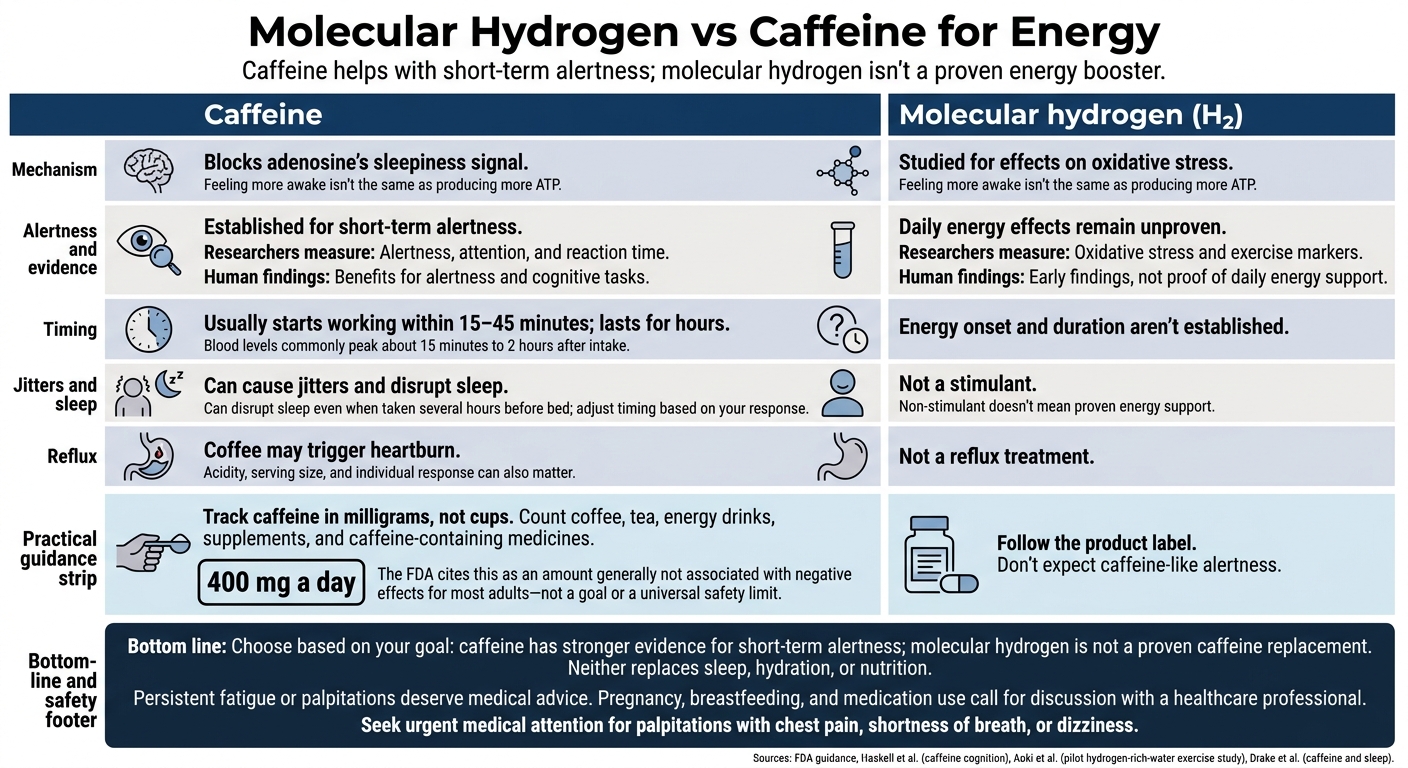
Molecular Hydrogen vs Caffeine for Energy
How Caffeine and Molecular Hydrogen Work
How Caffeine Reduces Sleepiness
Caffeine and hydrogen support energy in different ways. Adenosine builds up during the day and signals that it’s time to sleep. Caffeine blocks adenosine receptors, so you feel that signal less.
Feeling more awake isn’t the same as producing more ATP. ATP is the energy cells make mainly in their mitochondria.
Track caffeine in milligrams, not cups. Hydrogen works through a different route.
Why Molecular Hydrogen Is Not a Stimulant
Researchers study molecular hydrogen for antioxidant effects and cellular support - not stimulation.
| Evidence focus | Caffeine: established effects | Molecular hydrogen: research limits |
|---|---|---|
| What researchers measure | Alertness, attention, and reaction time | Oxidative stress and exercise markers |
| Human research findings | Benefits for alertness and cognitive tasks | Early findings, not proof of daily energy support |
Edenvia Molecular Hydrogen offers tablets that dissolve in water to make hydrogen-rich water for antioxidant support. When choosing between the two, the distinction is alertness versus non-stimulant support.
sbb-itb-6860cc4
TYLER LEBARON: THE BEST WAY TO START HYDROGEN WATER
Jitters, Sleep, and Acid Reflux
When the focus shifts from energy to side effects, the differences become more practical.
| Concern | Caffeine or coffee | Molecular hydrogen |
|---|---|---|
| Jitters | Can cause shakiness or restlessness, especially at higher doses or with other stimulants | No stimulant effect |
| Heart-rate sensations | Can cause a racing or pounding feeling, particularly with other stimulants | These symptoms still need medical attention |
| Sleep | Can disrupt sleep for hours | Not a stimulant |
| Reflux | May trigger heartburn in some adults | Not a reflux treatment |
Jitters and Heart Palpitations
If caffeine makes you shaky, cut back and check for other stimulants in your routine. Don’t dismiss heart palpitations. Seek urgent medical attention if they come with chest pain, shortness of breath, or dizziness.
If symptoms persist after you stop taking stimulants, seek medical advice. If you take medication or have a heart condition, ask a healthcare provider before use.
Sleep and Bedtime Timing
Caffeine timing matters, but there’s no cutoff that works for everyone. It can disrupt sleep even when you take it several hours before bed. If you struggle to fall asleep or wake up feeling unrested, move your last serving earlier.
Molecular hydrogen isn’t a stimulant, so timing matters less when it comes to sleep disruption.
Caffeine, Coffee, and Reflux
Coffee-related heartburn isn’t always about caffeine. Acidity, serving size, and how your body responds can also play a role. That makes dose and timing the next practical question.
Choosing and Timing Your Routine
When caffeine’s side effects matter as much as the energy boost, timing can guide your choice.
Choose based on your goal: alertness or non-stimulant support. Don’t expect molecular hydrogen to provide caffeine-like alertness.
| Consideration | Caffeine | Molecular Hydrogen |
|---|---|---|
| Intended use | Short-term alertness | Non-stimulant wellness support |
| Onset | Blood levels commonly peak about 15 minutes to 2 hours after intake | Energy onset not established |
| Duration | Effects may last several hours | Energy duration not established |
| Bedtime considerations | Allow several hours before bed; adjust based on your response | No stimulant-based bedtime cutoff |
| Preparation | Check caffeine content per serving | Follow the label directions |
Caffeine Dose and Timing
Track caffeine in milligrams, not just cups. Count all sources: coffee, tea, energy drinks, supplements, and caffeine-containing medicines.
The FDA’s 400-milligram daily amount for most healthy adults is not a target or a universal safety limit. Use the lowest amount that meets your goal. Before adding another serving, give yourself time to assess the first one’s effects.
Using Edenvia in a Non-Stimulant Routine
Edenvia Molecular Hydrogen can fit into your daily hydration routine as non-stimulant support - not an immediate energy boost. Follow the label directions: dissolve one tablet in room-temperature or chilled water, wait about 3 minutes, and drink within 30 minutes. Do not use hot water.[4][3]
Once you choose a routine, track it for several days before changing anything else.
Tracking Your Response
Over several days, record how much caffeine you take and when, along with your alertness and sleep. Note any jitters, sleep disruption, reflux, or palpitations.
Change one variable at a time so you can spot patterns. Keep sleep, hydration, and nutrition consistent, and seek medical advice for persistent fatigue, troublesome reflux, or palpitations.
Conclusion: Choose Based on Your Goal
After weighing alertness, jitters, sleep, and reflux, choose based on your goal.
Caffeine has stronger evidence for short-term alertness.[1] Molecular hydrogen is a non-stimulant wellness option - not a proven caffeine replacement.[2]
Edenvia can fit into a non-stimulant routine, but it shouldn’t replace sleep, hydration, or nutrition.
If you’re pregnant or breastfeeding, take medications, or have persistent fatigue, consult a healthcare professional before changing your caffeine intake or starting a supplement.
References
- Haskell et al. “Cognitive and mood improvements of caffeine in habitual consumers and habitual non-consumers of caffeine.” https://doi.org/10.1007/s00213-004-2006-0
- Aoki et al. “Pilot study: Effects of drinking hydrogen-rich water on muscle fatigue caused by acute exercise in elite athletes.” https://pmc.ncbi.nlm.nih.gov/articles/PMC3395574/
- Drake et al. “Caffeine Effects on Sleep Taken 0, 3, or 6 Hours before Going to Bed.” https://pmc.ncbi.nlm.nih.gov/articles/PMC3805807/
FAQs
Can I use molecular hydrogen and caffeine together?
Yes, you can use molecular hydrogen and caffeine together, according to the cited information, which lists no specific contraindications for combining them [1][3].
Edenvia Molecular Hydrogen tablets dissolve in water and are designed to support cellular health, mitochondrial function, and energy levels [1][2][3]. The unflavored tablets can fit into your daily routine alongside caffeinated beverages [2][4].
How can I cut back on caffeine without withdrawal?
If you’re cutting back on caffeine, Edenvia Molecular Hydrogen tablets offer a non-stimulant option for your routine. They may support cellular energy without caffeine-related jitters or sleep disruption. But they aren’t proven to prevent caffeine withdrawal.
Dissolve one tablet in 12 oz (about 350 mL) of room-temperature or chilled water for 3–5 minutes. Then drink it within 30 minutes.
How strong is the evidence for hydrogen’s antioxidant benefits?
Hundreds of peer-reviewed studies support molecular hydrogen’s antioxidant potential [1][2]. Research suggests it selectively targets harmful free radicals while leaving helpful reactive oxygen species intact [1][2]. Because its molecules are small, hydrogen can cross cell membranes and reach areas that larger antioxidants may struggle to access [3][4].
Findings point to possible benefits for cellular protection, metabolic health, and inflammation. However, scientific understanding is still developing, and further clinical studies are underway [1][5][2].
Related Blog Posts
Disclaimer: These statements have not been evaluated by the Food and Drug Administration. This product is not intended to diagnose, treat, cure, or prevent any disease. This article is for general informational purposes only and is not medical advice. Consult a qualified healthcare provider before starting any supplement, especially if you are pregnant or nursing, have a medical condition, or take prescription medication.